
When you picture Italy, what comes to mind? For me, I see a glass of red wine, Renaissance art, and winding roads lined with cypress trees. That dreamy scene you’re imagining? It’s Tuscany!
Tuscany is one of the most iconic Italian regions (also my personal favorite), and for good reason. It draws 52 million visitors every year who come for the rolling hills, historic cities, incredible food, and that effortlessly romantic atmosphere. If you’re one of the ones building their Italy itinerary, wondering whether it’s worth the trip? Let me make it easy for you: it definitely is.
From world-famous art and architecture to vineyard-covered landscapes and charming medieval towns, Tuscany truly feels straight out of a movie. And here’s the good news: you can turn that dreamy feeling into reality with all the tips I’m here to share.
In this post, I’m breaking down exactly what Tuscany is known for, the best things to do while you’re there, and when to visit. If Tuscany has been sitting on your Pinterest board for years, this is your sign to finally make that dream trip a reality.
What Is Tuscany Known For? Food, Wine, History, and More
If you’re trying to decide whether Tuscany deserves a spot on your Italy itinerary, understanding what it’s actually known for makes that decision a whole lot easier. And let’s be honest, some people plan their entire Italy trip around Tuscany alone! That should tell you everything.
Sure, you might remember Tuscany from history class: Leonardo da Vinci, the Renaissance, and the Middle Ages. But this destination isn’t just a chapter in a textbook. It’s rolling golden hills, vineyards that stretch for miles, medieval towns frozen in time, and food so good you’ll think about it for years.
By the end of this post, you’ll know exactly what Tuscany is famous for and whether it’s the right fit for your Italy adventure. Spoiler: it probably is.
Where Is Tuscany?
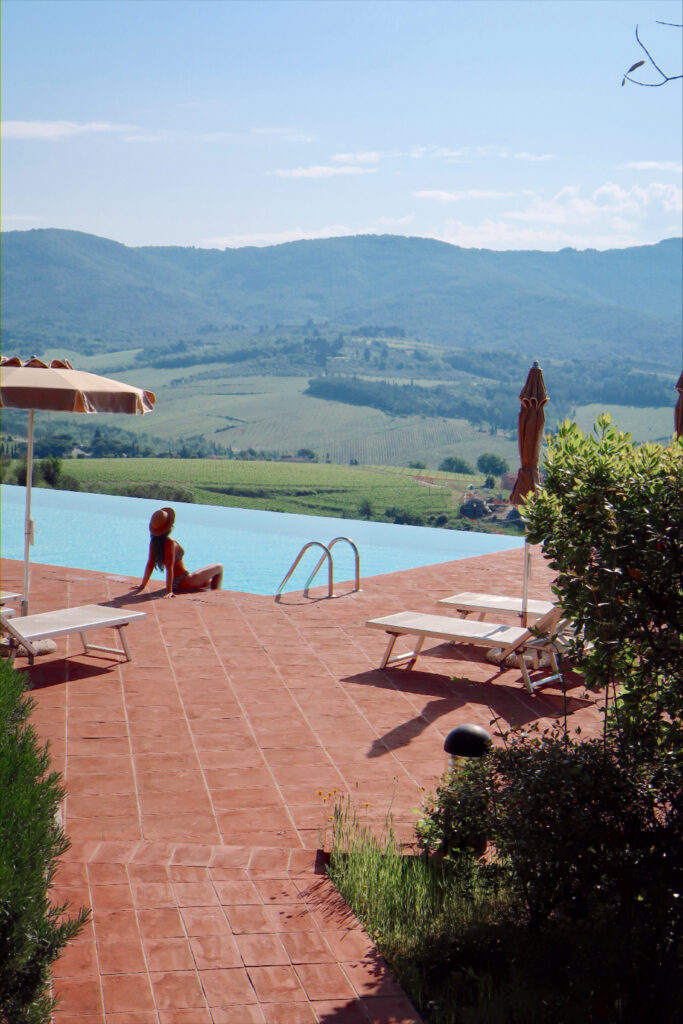
Tuscany is a region in central Italy, perfectly positioned between Umbria, Lazio (where Rome is!), Emilia-Romagna, and Liguria. It stretches from the Apennine Mountains all the way to the Tyrrhenian Sea. The scenery is equally iconic, with soft-sloping hills, rolling countryside, and peaceful coastal views. That variety is part of what makes Tuscany so special.
The two main cities are Florence and Siena, but honestly? The magic is often in the smaller towns like San Gimignano, Volterra, Pienza, Pisa, and Livorno. Each one has its own charm, views, and incredible food stops.
Getting there is easy. You can fly into Florence or Rome, then hop on Italy’s super reliable train system. No matter which airport you choose, Tuscany is surprisingly simple to reach and absolutely worth the journey.


What Is Tuscany, Italy, Known For?
Art and History
Tuscany is widely known as the birthplace of the Renaissance. In the 15th century, this region completely changed the course of art and culture. Legends like Michelangelo, Leonardo da Vinci, and Botticelli all came from here. Causal, I know.
You can still feel that history everywhere you go. In Florence alone, you’ll find the Uffizi Gallery, the iconic Duomo, and the Ponte Vecchio. And of course, there’s the Leaning Tower of Pisa just waiting for your classic tourist photo.
If you love wandering through centuries-old streets and popping into world-famous museums, Tuscany is an absolute must.
Scenic Countryside
Exploring Tuscany literally feels like stepping straight into a fairytale. You’ve probably seen places like Val d’Orcia, Chianti, and Montepulciano all over Instagram—and yes, they really are that beautiful in real life.
Picture old stone buildings, slightly leaning medieval towers, and winding roads that cut through green hills lined with cypress trees. As you drive, you’ll pass endless vineyards and hilltop towns rising in the distance like something out of a movie.
It’s cinematic in the best way. The kind of place where you’ll want your camera fully charged and extra memory cleared because every turn looks like a postcard.
Wine and Food
If there’s one thing you need to know about Tuscany, it’s this: they take their wine and food very seriously. And thank goodness they do. One of my favorite things about Italy is how each region has its own cuisine, rooted in local ingredients and generational traditions. Tuscany stays completely true to that.
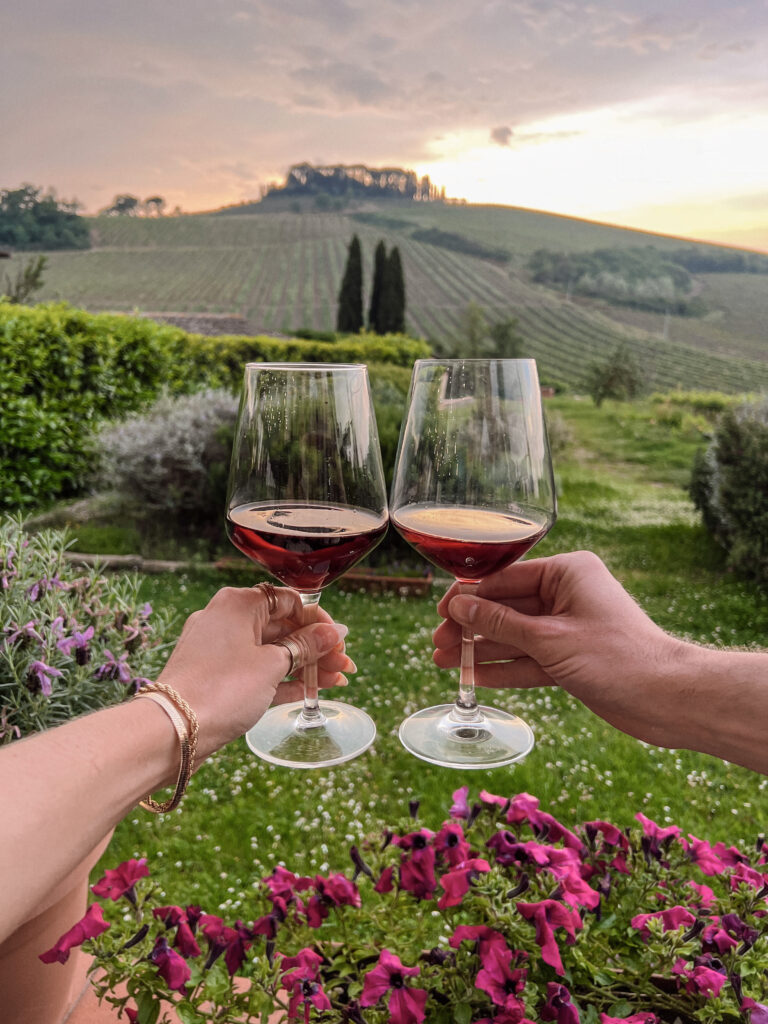
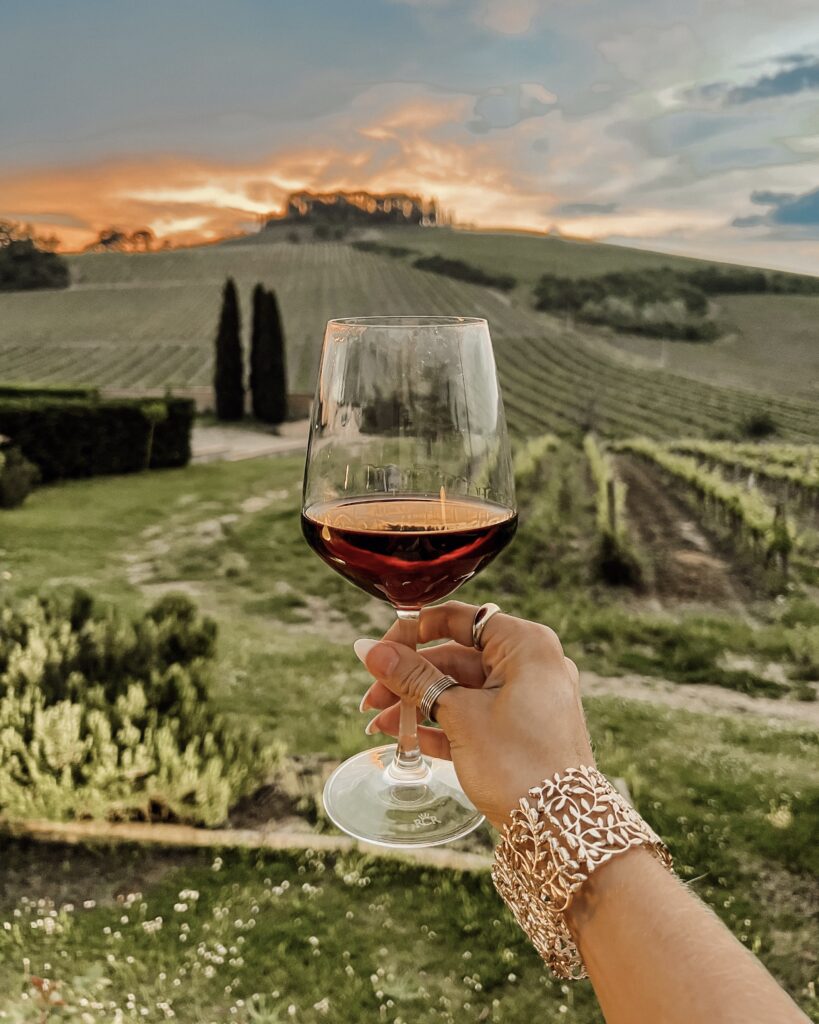
Let’s start with the wine, because Tuscany is basically wine royalty. Thanks to its fertile soil and dreamy climate, some of Italy’s best wines come straight from the region. When you’re at a wine tasting or lingering over dinner, here’s what you’ll likely see on the menu:
- Chianti Classico: The quintessential Tuscan red. Mostly Sangiovese grapes with an earthy, dry taste that’s perfect with pasta.
- Brunello di Montalcino: A full-bodied, elegant red made from 100% Sangiovese and aged longer than most. It’s refined and meant to be savored.
- Vino Nobile di Montepulciano: Also Sangiovese-based, it’s slightly softer and fruitier than Brunello.
- Rosso di Montalcino & Rosso di Montepulciano: Think of these as the younger siblings. Same regions, less aging, more approachable, and often more affordable.
- Vin Santo: A sweet dessert wine made from dried grapes and served with biscotti. Don’t skip it; it’s the perfect ending to a meal.
And then there’s the Tuscan food. Oh, the food!
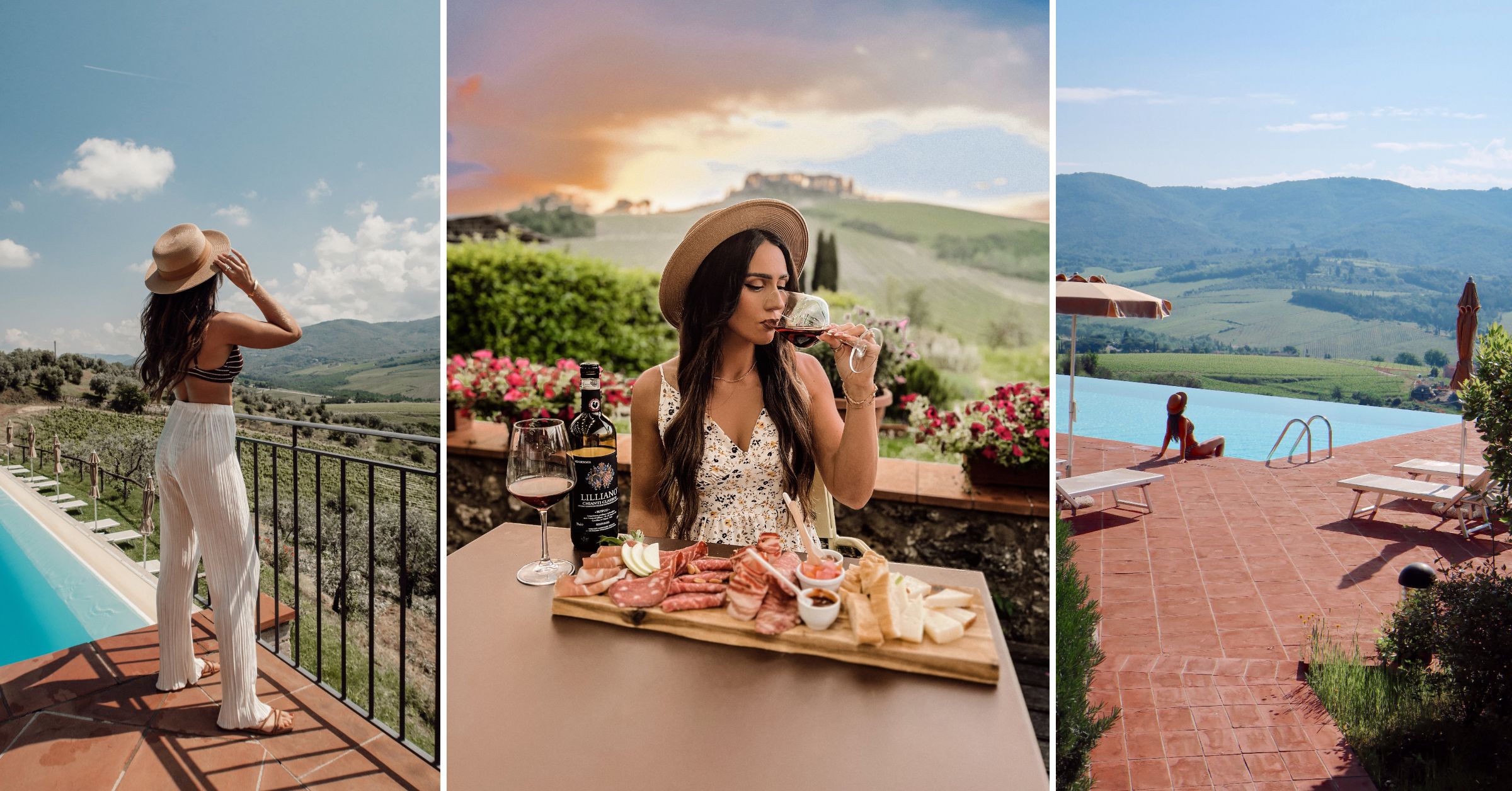
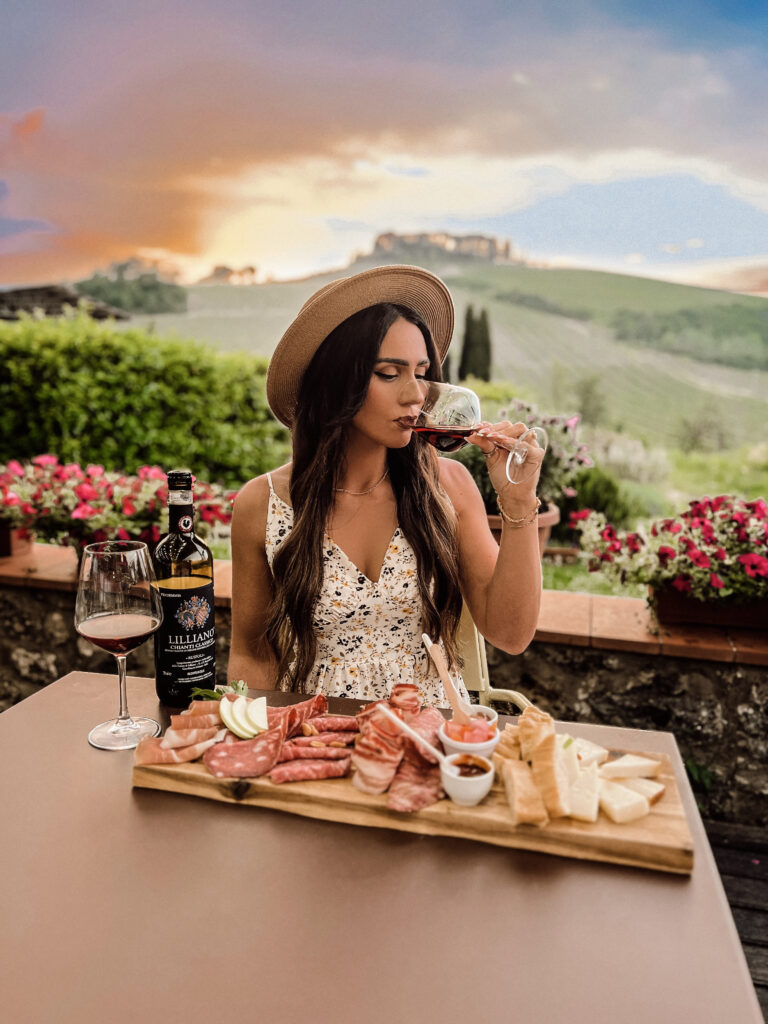
I’m talking plates of tagliatelle al cinghiale (pasta with wild boar) and thick, perfectly seared Florentine steak. Don’t forget sharp pecorino cheese, fresh truffles shaved over everything, and some of the best olive oil you’ll ever taste. One of my favorite parts of my first vineyard tour in Tuscany was the multi-course lunch with wine pairing we did at Castello di Verrazzano. Each course was delicious, and each wine pairing was perfection, but my absolute favorite part was just relaxing with the vineyard views. Time truly does slow down during meals in Tuscany, and that’s what makes it my favorite place in the world.
Honestly, you could plan a trip to Tuscany just to eat and sip wine all day, and it would still feel like a once-in-a-lifetime experience.


Lifestyle and Culture
You’ve probably heard the phrase la dolce vita (the sweet life), and honestly? Tuscan truly lives it.
This is not a rush-from-one-attraction-to-the-next kind of destination. It’s slow mornings, long lunches that turn into late afternoons, and sunsets you actually stop to watch. Tuscany has a way of gently forcing you to slow down. If you arrive with a packed, minute-by-minute itinerary, it’ll lovingly remind you to breathe, sit, sip your wine, and be present.
And as you slowly wander through Tuscan towns, you’ll notice charming little shops tucked along cobblestone streets. Inside, you’ll find hand-carved olive wood spoons and cutting boards, carefully painted ceramics, and beautifully stitched leather bags and gloves.
There’s a deep respect for craftsmanship here. Things aren’t mass-produced. Instead, they’re made slowly, traditionally, and with intention. And those are the kinds of souvenirs that mean something long after your trip ends.
Not sure how to spend your time in Tuscany to embrace the lifestyle and culture? Check out my “Tuscany Itinerary: The Ultimate Guide to Exploring Tuscany” next.

What to Do in Tuscany
Explore vineyards and enjoy Tuscan wine tastings.
I won’t even pretend; my absolute favorite part of Tuscany was touring the historic vineyards and tasting the local wines.
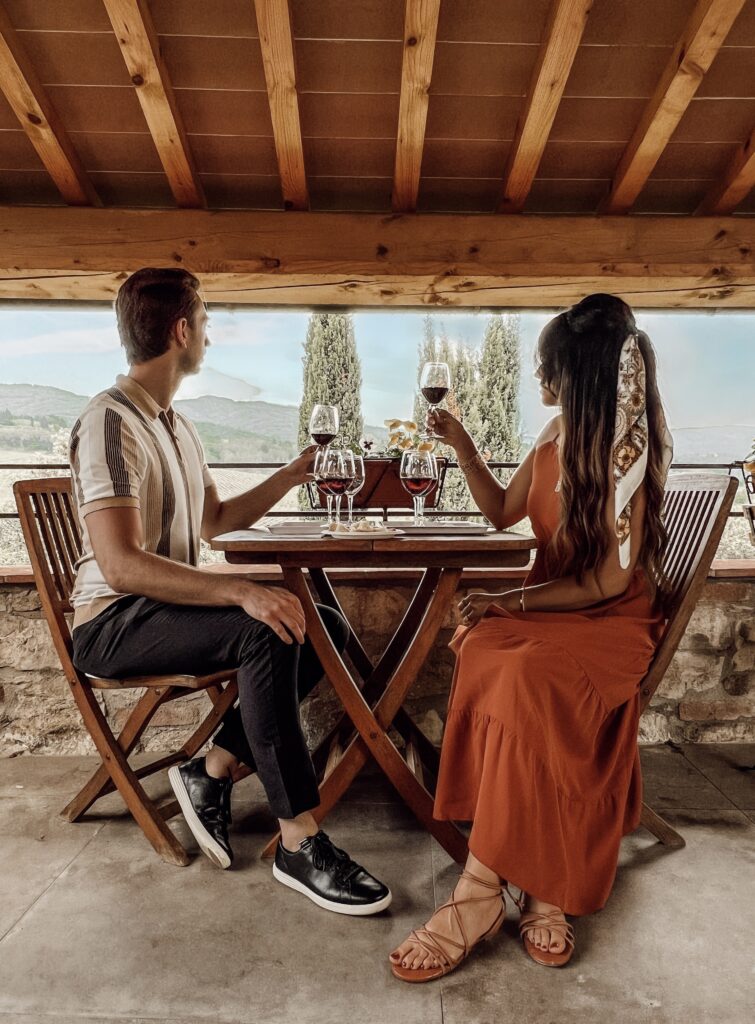
There’s something so special about sitting in the middle of the Tuscan hills, learning how each estate produces its wine, and hearing stories that go back generations. Then you actually get to taste the results! You’ll sip bold reds, snack on cured meats and pecorino, and somehow lose track of time in the best way. It’s one of those experiences that feels indulgent but also deeply cultural.
And the best part? There are hundreds of vineyards across the region. You could spend days—happily—just tasting your way through Tuscany. If you’re planning to add tastings to your itinerary, check out my post on the “Best Vineyards in Tuscany to Visit.”
Visit the iconic Leaning Tower of Pisa.
Okay, let’s talk about the Leaning Tower of Pisa, because I know you’ve heard mixed reviews. Some people will tell you it’s overrated. Others will say it’s absolutely iconic and you have to go. I’ll let you decide on how you feel about it for yourself! That said, there is something surreal about standing in front of something you’ve seen in textbooks your entire life and realizing… wait, this is real.
You can easily spend a morning exploring the tower and the cathedral, wandering the square, and soaking it all in. And obviously, you have to take the classic tourist photos. There is literally no other place in the world where you can pretend to “hold up” a leaning tower—so you might as well embrace it.
It’s one of those bucket-list things to do in Italy that you’ll laugh about and remember forever.
Stroll the streets of Medieval towns and villages.
One of my favorite things about Tuscany is how you can find tiny Medieval towns all across the region. They make perfect day trips. Each one has its own personality, history, and charm, so you’re never bored. Instead, you’ll catch yourself just constantly saying, “Wait… this one might be my favorite.”
Here are some of the most iconic ones to add to your itinerary:
- San Gimignano: Famous for its skyline of medieval towers, and yes, some of the best gelato in Italy.
- Lucca: Surrounded by beautifully preserved Renaissance walls, with cobblestone streets and tree-lined paths, you can bike along at sunset.
- Volterra: Dramatically perched on a hilltop with Etruscan history, alabaster shops, and sweeping countryside views.
- Monteriggioni: Tiny yet unforgettable; a perfectly walled stone village that feels completely frozen in time.
- Cortona: Steep stone lanes, romantic views over Lake Trasimeno, and that timeless Tuscan atmosphere you came for.
- Montalcino: A fortress-topped hill town famed for Brunello wine and rustic, yet elegant, vineyards.
- Montepulciano: A Renaissance gem overlooking Val d’Orcia, known for grand palaces and legendary wine tastings.
- Greve in Chianti: The gateway to Chianti wine country, with a charming triangular piazza and relaxed, wine-loving energy.
If you’re planning to explore these smaller towns, I highly recommend renting a car. It gives you the freedom to drive those scenic roads, stop whenever a view catches your eye, and move at your own pace. And trust me, in Tuscany, you’ll want that flexibility.
Soak in the history of Florence and Siena.
A trip to Tuscany isn’t complete without spending time in Florence and Siena. These two cities are the heart of the region, and once you visit, you’ll understand why.
In Florence, you’ll find some of the most famous works of art in the world. Think the Uffizi Gallery and the Galleria dell’Accademia (yes, Michelangelo’s David in real life is just as impressive as you imagine). You can spend hours wandering in museums, crossing the Ponte Vecchio, and staring up at the Duomo like, how is this even real?
Then there’s Siena; smaller, but just as magical. Piazza del Campo is one of the most beautiful piazzas in Italy. It’s also where the Palio horse race has been held since the 1600s. It’s dramatic, historic, and so uniquely Italian.
Both cities give you that lively Italian energy with busy streets, buzzing cafes, and jaw-dropping churches on every corner. I highly recommend joining a walking tour if you can; it makes history come alive in the best way.
And if you need some inspiration on how to spend your time in Florence? Check out my one-day Florence itinerary on Instagram.
Relax in natural thermal hot springs.
Did you know Tuscany is home to some of the best natural thermal hot springs in Europe? It’s true! And after days of walking cobblestone streets and climbing medieval towers, soaking in warm mineral water feels like the ultimate reward.
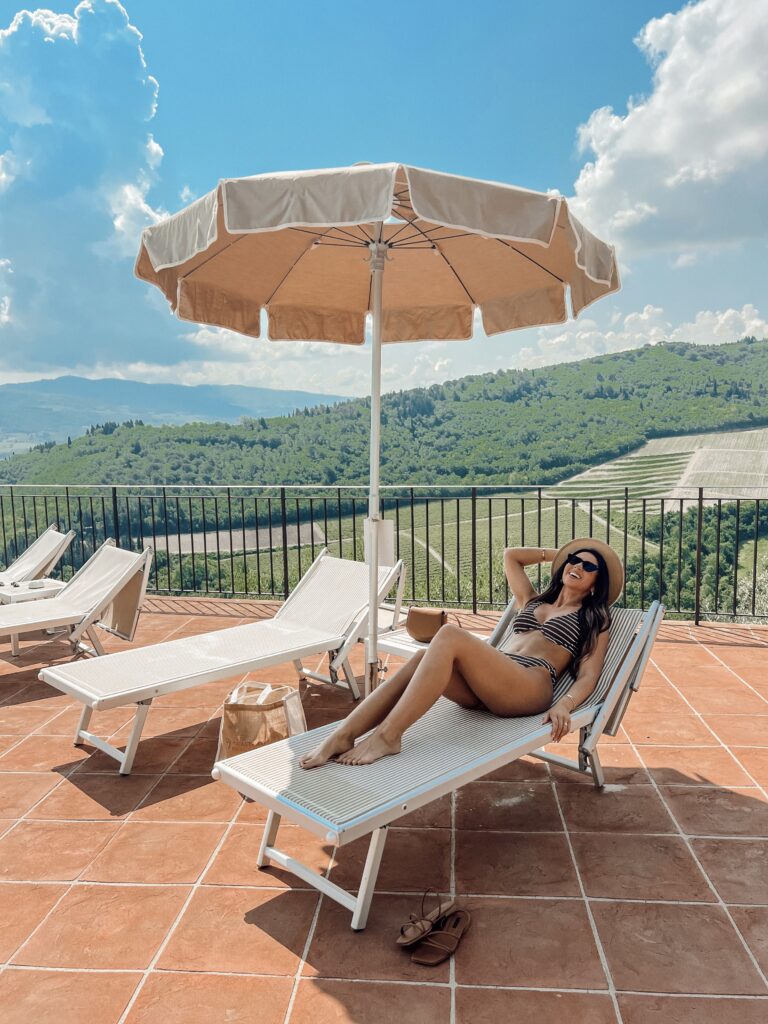
Picture this: countryside views, steam rising into the air, and you relaxing in your favorite bikini surrounded by nature. It’s such a peaceful contrast to the busy cities.
Some of the most popular hot springs include:
- Saturnia Hot Springs: Dreamy cascading travertine pools and warm, mineral-rich water flowing year-round. It looks straight out of a fantasy movie.
- Bagni San Filippo: Tucked into the woods with dramatic white limestone formations and natural soaking pools. It feels wild and untouched.
- Bagno Vignoni: A historic village where thermal water bubbles right into a large stone basin in the main square, with soaking spots nearby.
- San Casciano dei Bagni: Known since Etruscan times for its dozens of thermal springs, offering rustic natural pools and more developed spa options.
And the best part? You’ll see both tourists and locals soaking side by side. It’s not just a “tourist thing.” It’s part of the culture. Ending your Tuscany trip with a hot spring day is honestly the cherry on top of your gelato.


When Is the Best Time to Visit Tuscany?
If you’re trying to figure out the perfect time to visit Tuscany, let me make it easy for you. Go during the shoulder seasons! That’s from April to May and September to October.
The weather is amazing. Not scorching hot like peak summer, but still warm enough to wander vineyards and medieval streets comfortably. You’ll also deal with fewer crowds, which means shorter lines, better hotel prices, and way more breathing room.
And if you visit in the fall? You’re in for something special because it’s harvest season. Vineyards come alive, wine festivals pop up across the region, and you get to experience Tuscany in its most authentic form. It’s one of the best cultural experiences you can have in Italy.
Will you stop in Tuscany during your trip to Italy?
Now you officially know what Tuscany is famous for. So tell me… are you adding it to your Italy itinerary? Packed full of Renaissance art, rolling vineyards, medieval towns, and unforgettable foods, it’s a destination you deserve to enjoy.
If you want more help planning your Italy trip, I’ve got you covered. Check out my posts on “Where to Stay in Tuscany Region” and “Italy Travel Tips” next. And don’t forget to come say hi over on Instagram @sierrainthecity. I’m always sharing where I am in the world and travel tips while there.