
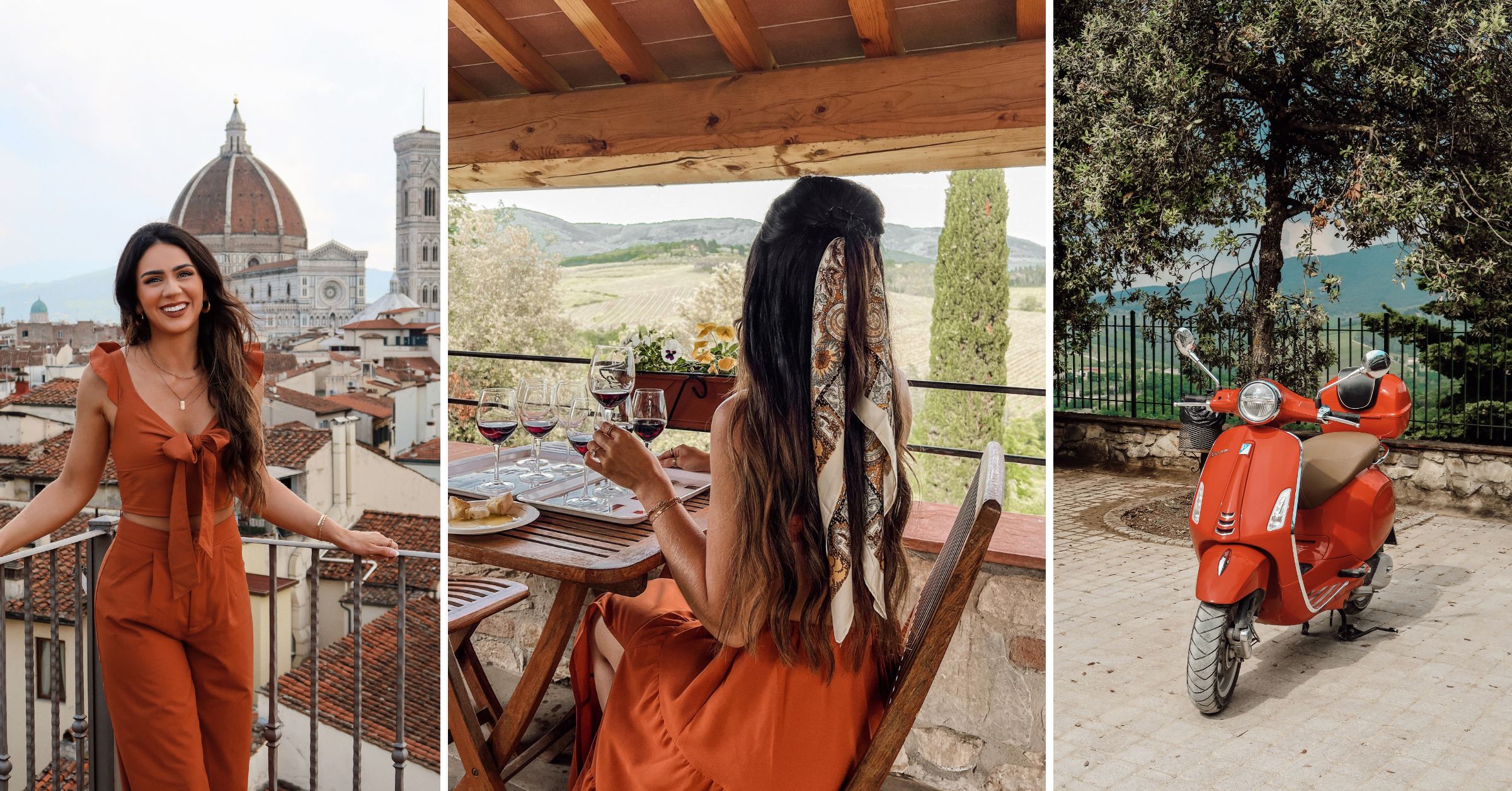
Planning a trip to Tuscany from Florence? Before you start dreaming about rolling hills, wine tastings, and little medieval towns (easily the fun part), there’s one pretty important detail to figure out first: how are you actually going to get around?
Tuscany easily became one of my favorite places I have ever traveled, but I definitely underestimated how spread out everything would be before our first trip. The region is filled with cities, tiny hilltop towns, wineries, vineyards, and countryside hotels, and the best way to reach them can be completely different depending on where you’re headed.
We stayed in Greve in Chianti and rented a car for three days, which gave us the freedom to drive through the countryside, visit wineries, and stop wherever we wanted along the way. For our Tuscany itinerary, I would rent a car again without hesitation. But that doesn’t necessarily mean you need one. Below, I’m breaking down the best ways to get from Florence to Tuscany, including when I’d rent a car, when I’d take the train, and what I’d choose if I only had one day to explore.
How to Get From Florence to Tuscany
First things first because this confused me a little when I started planning: Florence is already in Tuscany! Florence is the capital of the Tuscany region and one of the easiest starting points for exploring more of it. Where things get tricky is that Tuscany isn’t one compact destination. Cities like Pisa are easy to reach using public transportation, while a countryside hotel or winery may require a completely different plan.
For us, having our own car made Tuscany feel much more accessible. We weren’t planning our days around schedules, and some of my favorite moments were simply driving between destinations with those ridiculously pretty Tuscan views outside the window.
How Far Is Tuscany From Florence
There’s no single distance between Florence and Tuscany since Tuscany is an entire region. Depending on where you’re going, you could be less than an hour from Florence or spend several hours getting there.
We stayed in Greve in Chianti, which was a great home base for our first trip. It took us about 40 minutes to drive there from the Florence Airport, and picking up our car at the airport made things much easier because we could head toward the countryside without driving through central Florence.
For perspective, many popular destinations are relatively close:
- Greve in Chianti: Around 40-50 minutes by car
- Siena: Around 1-1.5 hours
- San Gimignano: Around 1 hour
- Pisa: Around 1-1.5 hours
Those are only estimates, and traffic can absolutely change them. More importantly, the nearest town isn’t necessarily your final destination. A winery that looks close on a map could still be another 30 minutes down smaller country roads. That’s why I’d decide exactly where you want to go in Tuscany before deciding how you’re getting there.
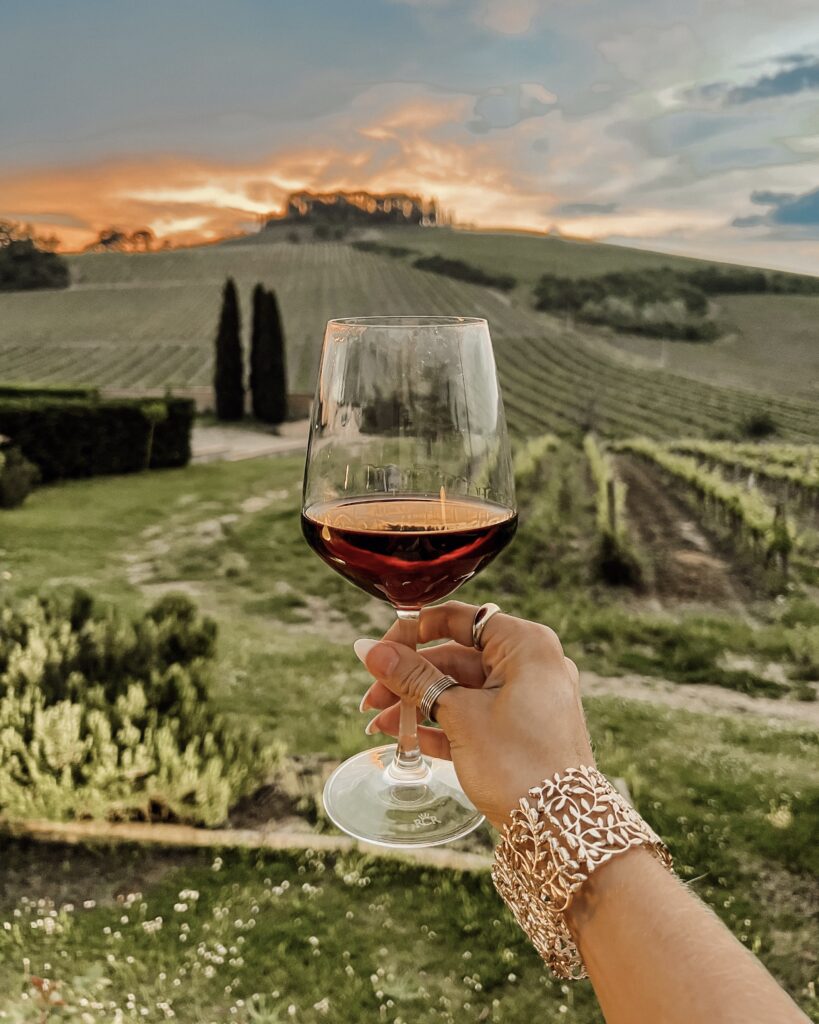

How Do You Get From Florence To Tuscany
There are five main options: driving yourself, taking the bus or train, joining an organized tour, or booking a private transfer. Which one I’d choose depends almost entirely on the trip. Heading to a major city? Take the train. Spending a few days winery hopping through Chianti? Pass over the car keys.
Rental Car
Best for: Wineries, countryside stays, small towns, and multi-day Tuscany trips
If your Tuscany plans involve vineyards, smaller towns, or a countryside hotel, renting a car is hands-down my favorite option. We rented a small SUV from SIXT at Florence Airport and drove ourselves around Tuscany for three days. We chose a Jeep Compass, and our total came to around €475.
Before you panic at that price, we intentionally did not choose the cheapest option. Because it was our first time driving on our own in another country, we paid for the highest insurance coverage, unlimited kilometers, and the refueling service. There were definitely cheaper options, but the extra peace of mind was worth it to us.
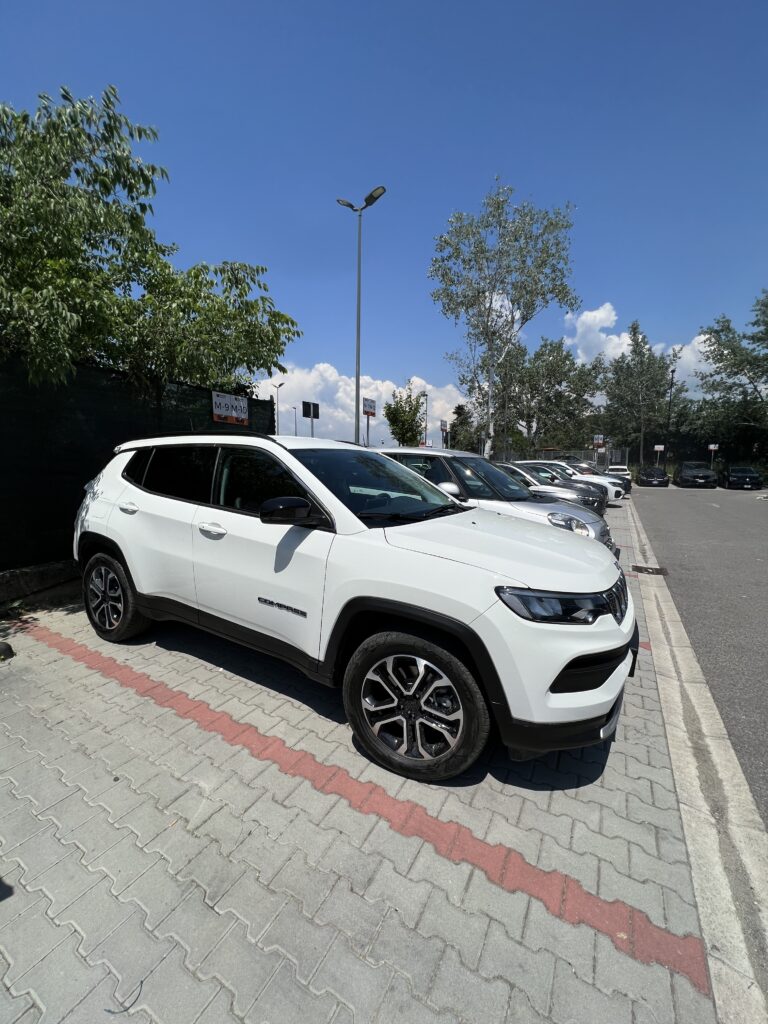
We booked about six weeks before our trip, and I’d book even earlier during peak summer and fall travel.
This is especially important for Americans who need an automatic transmission (automatics are limited compared with manuals and tend to sell out first!) If you’re traveling from the U.S., you’ll also want to get an International Driving Permit before leaving home. We got ours through AAA a few weeks before our trip, and it was incredibly simple.
I also recommend renting your car from Florence Airport rather than near the train station, especially if you’re not used to driving in Italy. We actually took the train from Rome to Florence, then grabbed a cab from the train station to the airport to pick up our rental car. The airport is outside the busy city center, so it was much easier for us to get on the road and head straight into the Tuscan countryside without navigating central Florence. We did the same thing in reverse when returning the car, dropping it off at the airport and taking a cab back into the city.
One more oddly specific tip that could potentially save you a very expensive mistake:
Double-check the fuel type before filling up.
Putting the wrong fuel into a vehicle is an easy tourist mistake, and the damage isn’t necessarily covered by your insurance package.
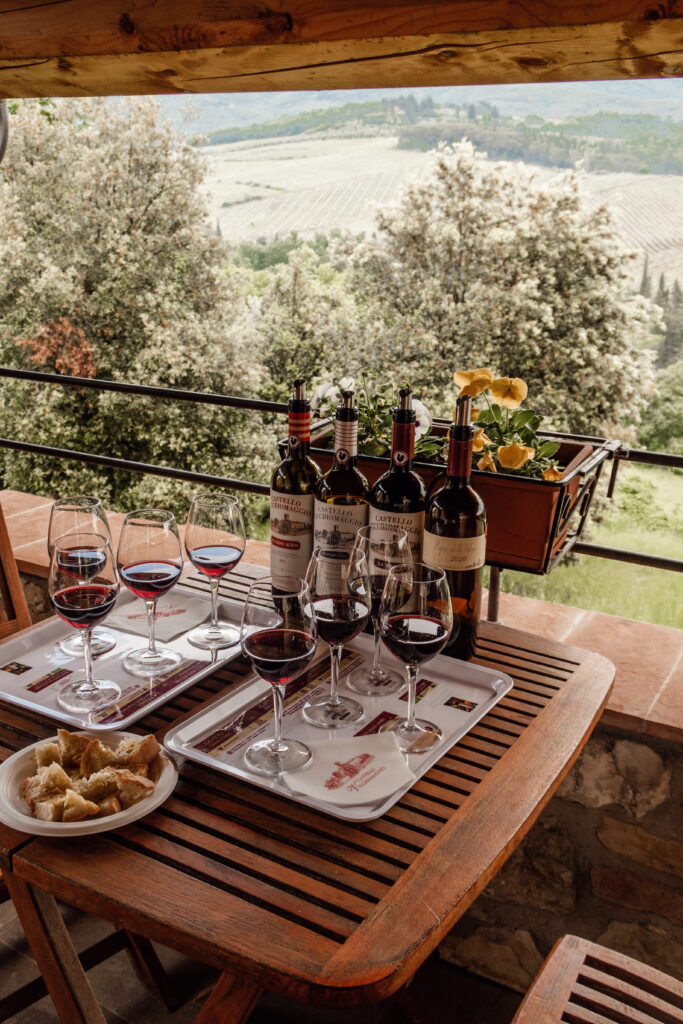
For us, having a rental car was absolutely worth the extra planning. Many of Tuscany’s wineries aren’t conveniently located within towns, so having our own vehicle meant we could go exactly where we wanted without piecing together transportation.
My verdict: If you’re spending several days exploring the Tuscan countryside, this is the option I’d choose again and again.
Worth Knowing: Watch for ZTL Zones
Many historic city centers in Italy, including Florence, have restricted driving areas called ZTL zones (Zona a Traffico Limitato). Driving into one without authorization can result in a fine, so always check your route and signage before entering a historic center.
Train
Best for: Pisa, Lucca, Arezzo, and other well-connected towns and cities
For some of the larger towns, the train can actually be easier than renting a car. You don’t have to worry about parking, navigating unfamiliar roads, or accidentally driving somewhere you shouldn’t.
Florence’s main railway station is Santa Maria Novella, right in the historic center, and you’ll find connections from there to destinations throughout Tuscany. Italy’s train stations are generally easy enough to navigate once you understand the departure boards. We use the trains all throughout Italy when we visit and I’d absolutely choose rail for the right destination.
The important distinction is that the train is great for getting from city to city. It’s considerably less useful if your destination is a vineyard or rural hotel several miles outside town. Siena is also a slightly different case because its railway station sits outside the historic center, so I’d compare the train and bus before automatically choosing rail.
My verdict: Fantastic for city-focused trips but not my choice for winery hopping throughout the countryside.
Bus
Best for: Specific towns with convenient direct connections
Buses can be useful in Tuscany, and there are certain routes where they make a lot of sense. But I wouldn’t build an entire countryside itinerary around them. The biggest issue is flexibility. Once you’re relying on a bus schedule, a spontaneous long lunch or an extra glass of wine at a winery gets a little harder to pull off. And even if a bus gets you into town, that doesn’t mean it will get you anywhere near the vineyard you actually want to visit.
Greve in Chianti, for example, can be reached from Florence by bus, so you don’t necessarily need to drive simply to visit the town. It’s when you start adding rural stops that things become complicated.
My verdict: Good for the right route but frustrating for a multi-stop countryside itinerary.
Tour Group
Best for: Seeing Tuscany in one day without driving
If you only have time for a day trip from Florence, this is probably the option I’d recommend most. An organized tour takes care of the annoying logistics for you, and you can actually enjoy the wine tastings without someone in your group needing to be the designated driver. Depending on the tour, you may be able to combine wineries with towns like Siena or San Gimignano in a single day.
The obvious downside is that you’re following someone else’s schedule. If you fall in love with a town and want another two hours there, too bad, your bus is leaving. Personally? If you have several days available, I wouldn’t experience all of Tuscany this way. Part of what I loved most was being able to slow down, linger over lunch, and decide what we felt like doing next.
My verdict: Probably the easiest way to see the countryside if you only have one day.
Private Transfer
Best for: Getting directly from Florence to a countryside hotel
A private transfer makes the most sense when you need to get from point A to point B rather than sightseeing throughout the day.
For example, if you’re leaving Florence and spending three nights at a resort or villa where you’ll mostly stay on property, having a driver take you directly there could be incredibly convenient. You don’t have to deal with renting a car, navigating, or hauling luggage onto public transportation.
Where I wouldn’t use this strategy is for hopping between multiple wineries and towns unless you’ve specifically hired a private driver for the day. Those individual rides can add up quickly, and transportation is less readily available once you’re deep in the countryside.
My verdict: Convenient for one-way transportation, but not the most economical way to explore multiple destinations.

What’s the Best Way to Get From Florence to Tuscany?
If you’re still deciding, I’d make it pretty simple:
- Rent a car if you want to explore wineries, small towns, countryside hotels, and several destinations over multiple days.
- Take the train if you’re visiting well connected cities and don’t need transportation once you arrive.
- Use the bus when your specific destination has a convenient direct route from Florence.
- Book a tour if you only have one day and want to see wineries or several Tuscan highlights without worrying about transportation.
- Choose a private transfer if you simply need comfortable transportation between Florence and one countryside destination.
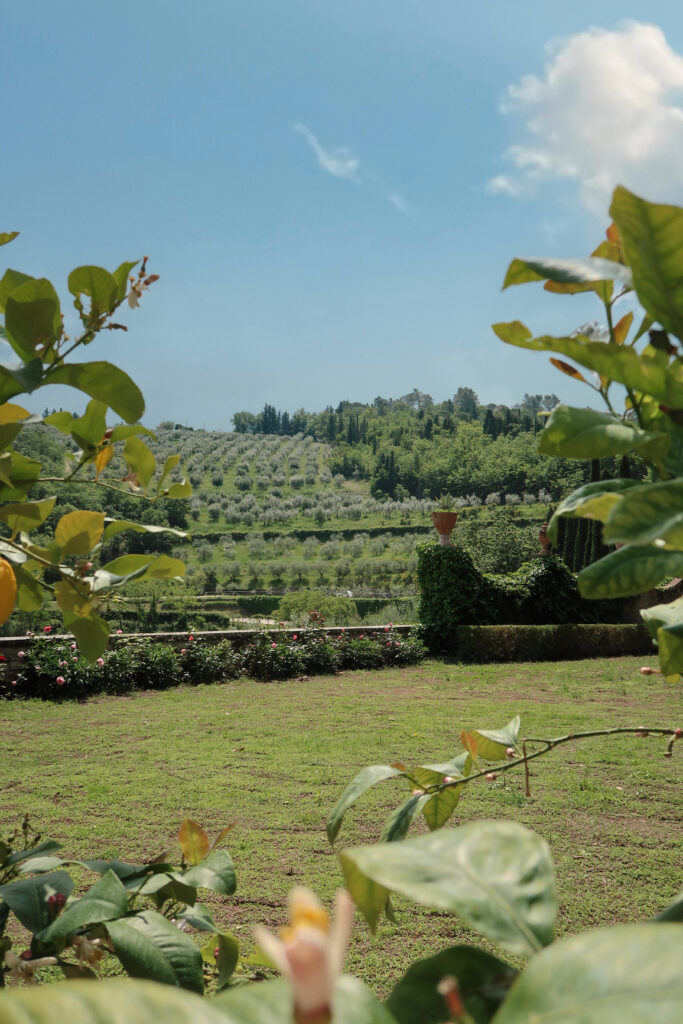
For our trip, renting a car was 100% the right decision. Driving ourselves through Tuscany gave us the freedom to experience the region the way I’d imagined it: slowly, spontaneously, and with plenty of stops along the way.
If you’re considering a day trip from Florence versus actually staying in Tuscany, I’ll always vote for staying a few nights if your itinerary allows it. Tuscany isn’t somewhere I’d rush through. Give yourself time for the long lunches, winery visits, tiny towns, and those drives through the countryside that somehow end up being just as memorable as wherever you’re headed.

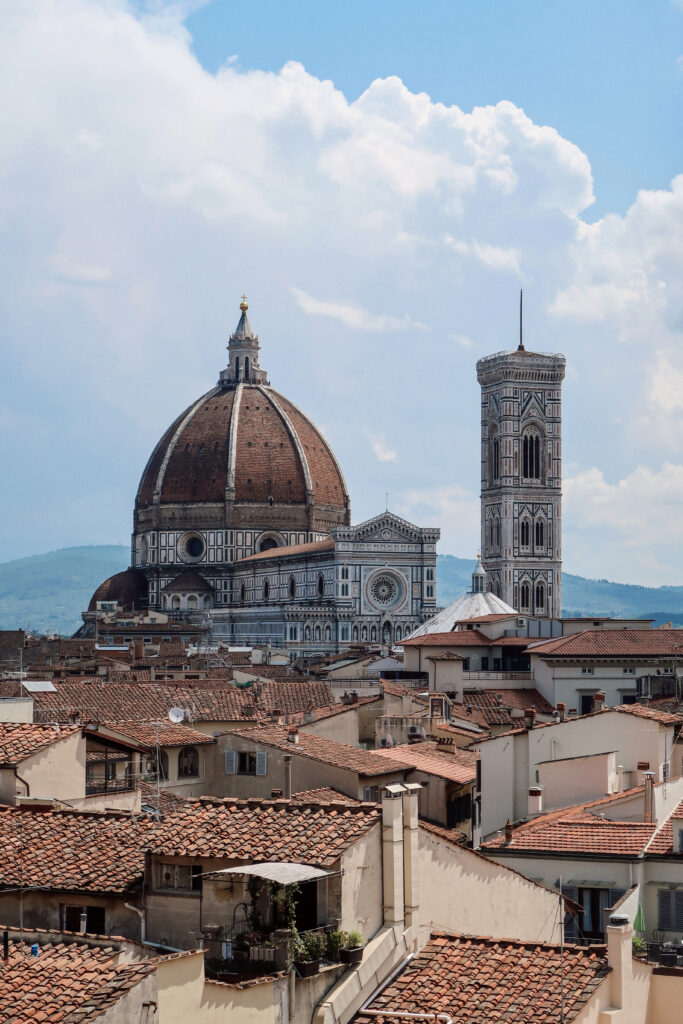
Enjoying Florence after our visit to the Tuscan countryside!
Getting from Florence to the rest of Tuscany is honestly much easier once you know what kind of trip you want.
For us, renting a car was absolutely the right call because we wanted to stay in the countryside, visit wineries, and explore at our own pace without watching the clock.
If you’re still building out your trip, my Tuscany itinerary can help you decide how many days to spend in each area and what’s actually worth fitting in. And if wine tasting is high on your list (it definitely should be!), don’t miss my guide to the best vineyards in Tuscany to visit for the wineries I’d personally prioritize.
No matter how you get there, give yourself enough time to actually enjoy Tuscany. It’s one of those places that’s so much better when you’re not rushing from stop to stop.